


 0086-532-87965066
Industry News
Industry News
September—the golden autumn—marks the peak season for the steel market.
Moving past the sluggish, range-bound performance of the August off-season—characterized by high temperatures—the market in September has entered a phase defined by a three-way dynamic: recovering demand, rising costs, and contracting supply. With recent steel prices undergoing a minor pullback and consolidation, inventories continuing to decline, and raw material costs providing strong support—complemented by policy backing for real estate and infrastructure alongside the ongoing optimization of export structures—the operational logic for the entire steel industry in the second half of the year has become crystal clear.
I. Latest Market Trends for September:
A slight pullback consolidates the bottom, with the market showing a strong, fluctuating trend during the "Golden September" period.
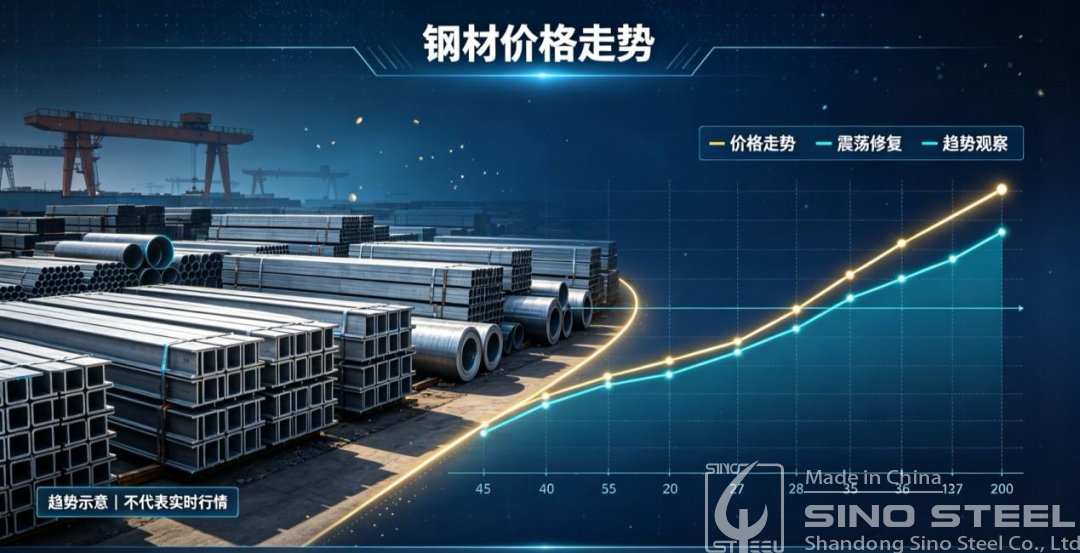
1. Current Price Situation: A short-term pullback does not equate to a weakening trend; it represents a normal market correction during the peak season. National benchmark quotes as of early September: • Tangshan common carbon steel billets: 3,110 yuan/tonne (slight pullback of 10 yuan). • Shanghai rebar: 3,090 yuan/tonne (pullback of 20 yuan; basis spread recovering from lows). • Hot-rolled coils and medium-heavy plates: Flat steel products show greater resilience with smaller price drops compared to construction steel, supported significantly by the manufacturing sector. Overall market dynamics: Futures are fluctuating and correcting, spot prices have pulled back slightly, and there is extremely strong support at the bottom. This round of price declines is not a bearish signal but a rational correction of earlier market expectations; the industry consensus is that the scope for a deep drop is closed off, and signs of stabilization at low levels are evident.
2. Supply-Demand Landscape: Supply contraction, inventory reduction, and a gradual recovery in demand. • Supply remains controlled: Policies to reduce crude steel output through 2026 continue to be implemented; July saw year-on-year declines in both crude steel and finished steel production. Maintenance and production limits at steel mills have become the norm, eliminating the previous scenario of loose overall supply. Coupled with the recent implementation of four rounds of coke price hikes, steel mill profits are being squeezed, increasing the willingness to voluntarily cut production and further locking in the price floor. • Continued inventory destocking and better-than-expected consumption resilience: Latest data shows a continuous month-on-month decrease in total steel inventory, reflecting a healthy "increased supply + destocking" structure, which indicates that genuine end-user demand is steadily being released. • Divergence in demand: Construction steel—real estate recovery is mild, infrastructure acts as a stabilizer, and essential demand is slowly rebounding; Industrial flat steel—demand from manufacturing, machinery, new energy, and automotive sectors remains robust, maintaining the trend where flat steel outperforms construction steel throughout the year.
II. Latest Key Industry Developments – September 2026
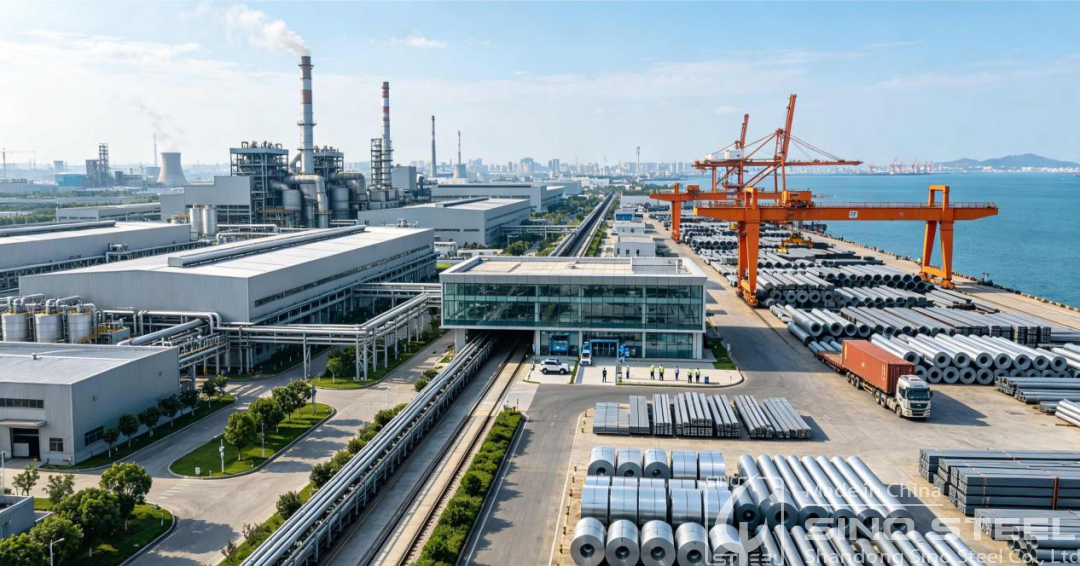
1. Raw material costs have risen sharply, establishing a solid floor for steel prices. Four consecutive rounds of coke price hikes have taken effect, shifting the cost baseline upward and leaving steel mills alternating between razor-thin profits and slight losses. With rigid cost support, there is little room for a steep drop in steel prices but strong momentum for gains; the overall trend for the second half of the year is expected to be one of fluctuating upward movement.
2. Real estate policies continue to loosen, shoring up end-user demand. Recent major optimizations to housing finance policies include extending maximum mortgage terms to 40 years, promoting the sale of completed homes, and fully implementing the policy of issuing property ownership certificates upon delivery. These policies aim to stabilize the real estate market and completion rates; demand for construction steel is expected to surge in the fourth quarter, making up for the shortfall seen during the earlier off-season.
3. The export landscape continues to be reshaped, while domestic competition for ordinary steel products intensifies. National steel exports fell 4.4% year-on-year from January to July, with export volumes of standard construction materials continuing to contract. Key reasons include strict export licensing controls, rising overseas trade barriers, and fierce price competition for low-end steel. However, clear new opportunities have emerged: export premiums for high-value-added flat steel, specialty steel, and low-carbon "green" steel continue to rise, while steady demand from "Belt and Road" regions, the Middle East, and Southeast Asia is driving growth in foreign trade.
Previous Page:The Group's Building Materials Division Makes a Stunning Debut at the 139th Canton Fair Brand Exhibition.
Next Page:Last page
 Online Order
 Whatsapp:+8617669729703
 Email:sinosteel@sino-steel.net
 Go top